


𝘙𝘦𝘧𝘭𝘦𝘤𝘵𝘪𝘰𝘯𝘴 𝘪𝘯𝘴𝘱𝘪𝘳𝘦𝘥 𝘣𝘺 𝘢 𝘱𝘰𝘭𝘪𝘵𝘪𝘤𝘢𝘭 𝘴𝘱𝘦𝘦𝘤𝘩, 𝘣𝘶𝘵 𝘶𝘭𝘵𝘪𝘮𝘢𝘵𝘦𝘭𝘺 𝘢𝘣𝘰𝘶𝘵 𝘵𝘩𝘦 𝘓𝘪𝘣𝘦𝘳𝘪𝘢 𝘸𝘦 𝘤𝘩𝘰𝘰𝘴𝘦 𝘵𝘰 𝘣𝘶𝘪𝘭𝘥.
𝐁𝐲 𝐃𝐞𝐫𝐞𝐤 𝐌. 𝐌𝐨𝐨𝐫𝐞
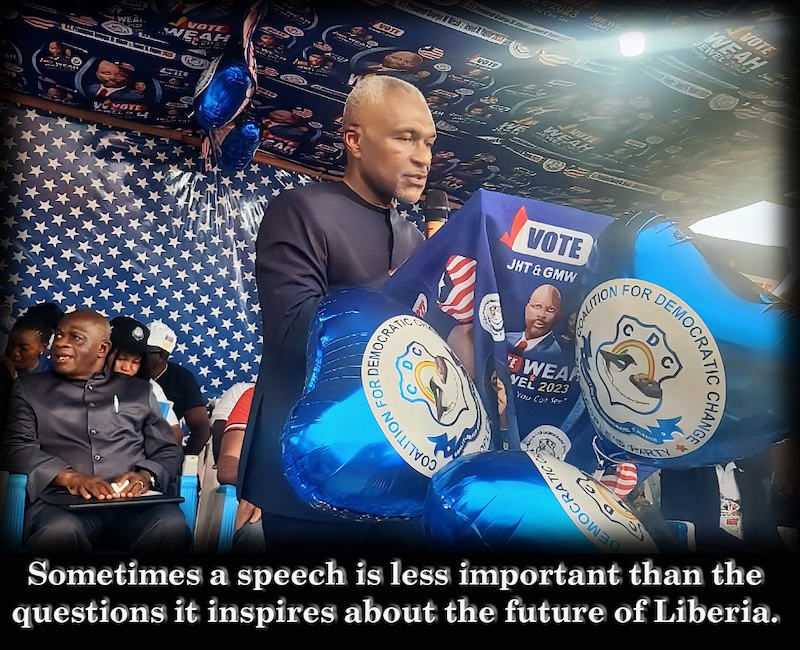
Sometimes a political speech is important not because of the politician who delivers it, but because of the questions it forces a nation to ask itself.
I listened carefully to Alexander Cummings’ keynote address at the CDC’s 22nd Anniversary celebration.
Alexander Cummings is a political figure who draws strong reactions. Some admire him. Others strongly oppose him. That is politics. But this reflection is not about supporting or opposing him. I am using his speech only as the doorway into a larger conversation about Liberia’s untapped potential.
If President Joseph Boakai, former President George Weah, or any other Liberian leader had delivered a speech that pushed me to think this deeply about Liberia’s future, I would be writing the same article.
𝐓𝐡𝐢𝐬 𝐈𝐬 𝐀𝐛𝐨𝐮𝐭 𝐋𝐢𝐛𝐞𝐫𝐢𝐚
For nearly two centuries, we have debated who should lead the country. Perhaps it is time we spend the same energy debating what kind of country we are trying to build.
Political parties win elections. Great nations win generations.
Roads matter. Every government deserves credit when roads are built, hospitals are improved, schools are renovated, or electricity reaches more communities. Visible development should never be dismissed.
But roads alone do not transform a nation.
A nation changes when its people become educated, skilled, productive, innovative, and prepared to compete with the rest of the world.
That is where Liberia’s real challenge begins.
𝐓𝐡𝐞 𝐋𝐢𝐛𝐞𝐫𝐢𝐚𝐧 𝐌𝐢𝐧𝐝: 𝐎𝐮𝐫 𝐆𝐫𝐞𝐚𝐭𝐞𝐬𝐭 𝐔𝐧𝐭𝐚𝐩𝐩𝐞𝐝 𝐑𝐞𝐬𝐨𝐮𝐫𝐜𝐞
Liberia is rich in iron ore, gold, rubber, timber, diamonds, fertile land, and potential offshore oil. Liberia has long struggled with “growth without development” — impressive exports and natural wealth that have not produced enough broad-based prosperity, industrialization, or opportunity for ordinary citizens.
Yet we remain poor because we have not invested enough in the one resource that multiplies every other resource: the Liberian mind.
Singapore had no great mineral wealth, but it invested in world-class education, discipline, technology, ports, logistics, and human capital. Today, global companies do not go to Singapore because of gold under the ground. They go because of the quality of the people, the strength of the institutions, and the seriousness of the national vision.
That is the lesson Liberia must study.
Our goal should not be to educate Liberians so they can leave Liberia and build other countries. Our goal should be to educate Liberians so well that companies come to Liberia because they need Liberian talent.
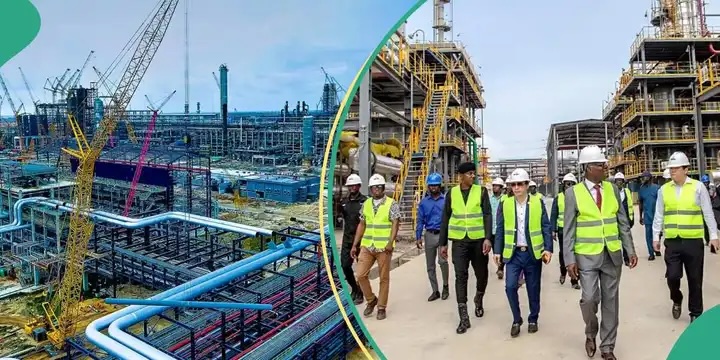
Imagine a Liberia where international companies build factories, technology centers, logistics hubs, manufacturing plants, research facilities, and regional offices because our young people are trained, reliable, innovative, and ready.
Imagine if every county had strong public schools, modern technical institutes, and serious vocational training.
Imagine if Liberia deliberately produced engineers, software developers, accountants, doctors, teachers, agricultural experts, petroleum engineers, mining specialists, contract negotiators, financial analysts, and entrepreneurs at scale.
That is how a country changes its destiny.
An educated voter is harder to manipulate. An educated worker attracts investment. An educated entrepreneur creates jobs. An educated engineer builds industries. An educated farmer feeds a nation. An educated society demands accountability.
𝐄𝐝𝐮𝐜𝐚𝐭𝐢𝐨𝐧 𝐈𝐬 𝐍𝐨𝐭 𝐀 𝐌𝐢𝐧𝐢𝐬𝐭𝐫𝐲—𝐈𝐭 𝐈𝐬 𝐀 𝐍𝐚𝐭𝐢𝐨𝐧𝐚𝐥 𝐒𝐭𝐫𝐚𝐭𝐞𝐠𝐲
This is why education cannot be treated as one ministry among many. Education must become Liberia’s central development strategy.
We must stop asking only, “Who owns the mine?” and begin asking, “How many Liberians are qualified to manage the mine?”
We must stop asking only, “Do we have oil?” and begin asking, “How many Liberian petroleum engineers are we producing before oil is extracted?”
We must stop asking only, “How much gold do we have?” and begin asking, “How many Liberians can negotiate billion-dollar agreements that protect the country’s long-term interest?”
Botswana used diamond wealth to invest in national development. Ghana has pursued policies to increase local participation in mining and petroleum, including equity participation, local procurement, employment, skills transfer, and capacity building. Burkina Faso has forced a wider African debate about who should benefit most from Africa’s natural resources.
Liberia does not have to copy any country blindly, but we should be serious enough to study what works.
Foreign investment is not the enemy. Poor negotiation is. Lack of preparation is. A weak education system is. A country that exports raw materials while importing expertise will always remain dependent.
𝐀 𝐍𝐚𝐭𝐢𝐨𝐧𝐚𝐥 𝐑𝐚𝐢𝐥𝐰𝐚𝐲: 𝐌𝐨𝐯𝐢𝐧𝐠 𝐎𝐩𝐩𝐨𝐫𝐭𝐮𝐧𝐢𝐭𝐲, 𝐍𝐨𝐭 𝐉𝐮𝐬𝐭 𝐓𝐫𝐚𝐢𝐧𝐬
Transportation must also be part of this national vision. Roads are important, but Liberia should also think seriously about rail.
Historically, our railroads were built mainly to move iron ore from mines to ports. But imagine a modern railway system designed to serve the Liberian economy, not just extractive industries.
Imagine farmers moving rice, cassava, cocoa, vegetables, rubber, and palm products more cheaply from the interior to major markets. Imagine students, workers, traders, tourists, and families traveling more safely and affordably. Imagine factories being built outside Monrovia because transportation is reliable.
Rail would not simply move trains. It would move opportunity.
If Liberia is serious about reducing poverty, agriculture cannot remain trapped by bad roads, high transport costs, and limited market access. A farmer should not lose profit simply because getting goods to market is too expensive.
Reliable electricity must also be treated as a national development priority. No serious manufacturing economy can grow when businesses are forced to depend on expensive generators just to operate. If Liberia wants factories, technology centers, cold storage, processing plants, and large-scale investment, we must build a power system that is stable, affordable, and capable of supporting industry.
This is why Liberia needs national priorities that survive every election cycle: world-class education, modern transportation, strong institutions, agricultural modernization, and resource agreements that build Liberian capacity.
Governments will come and go. These priorities should remain.
𝐇𝐨𝐰 𝐒𝐡𝐨𝐮𝐥𝐝 𝐖𝐞 𝐂𝐡𝐨𝐨𝐬𝐞 𝐎𝐮𝐫 𝐋𝐞𝐚𝐝𝐞𝐫𝐬?
This also means we must begin evaluating leadership differently. Not only by party loyalty, personal friendship, tribe, popularity, or political emotion, but by whether a leader has a serious plan for education, transportation, agriculture, investment, institutions, and job creation.
The question should not simply be who we like.
The question should be who is best prepared, with the right vision, team, and discipline, to help Liberia become the country we say we want.
𝐎𝐧𝐞 𝐅𝐢𝐧𝐚𝐥 𝐐𝐮𝐞𝐬𝐭𝐢𝐨𝐧
Whether you support Boakai, Weah, Cummings, or someone else entirely, one question belongs to all of us:
What kind of Liberia are we intentionally building?
If we continue to educate our brightest minds only for them to leave, we will keep exporting our future. But if we build a country where educated Liberians can stay, work, innovate, manufacture, lead, and compete, companies will come not merely for our resources, but for our people. And just as importantly, our best minds abroad would have a reason to come back home — not simply to look for government jobs, but to use their skills in an environment that can sustain them, reward them, and allow them to help build the country they love.
That is the Liberia I hope to see.
A Liberia where opportunity is not exported.
A Liberia where talent is not wasted.
A Liberia where the greatest national resource is not what lies beneath the soil, but what we develop inside the minds of our people.
So before we argue about who should win the next election, maybe we should first ask whether Liberia is preparing the next generation to inherit a real economy — or just another political argument.
Because history will not remember us for the elections we argued about. It will remember us for the Liberia we chose to build.
#Liberia #TheFutureOfLiberia #NationBuilding #EducationFirst #HumanCapital #Leadership #EconomicDevelopment #RailTransportation #ThinkLiberia