




A call to Black Americans — Vindicating the Dream of Paul Cuffe
Matthew W. Elious
Two hundred years ago, a Black American looked across the ocean toward Africa and saw something no one else of his generation could see.
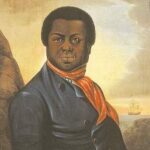
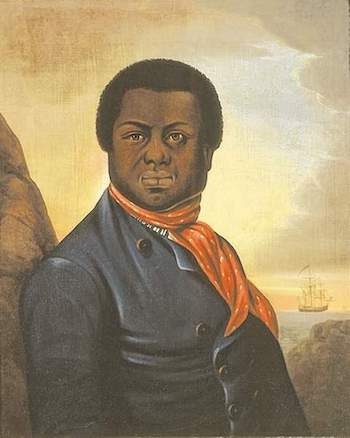
His name was Paul Cuffe. He was a sea captain, a shipbuilder, a merchant — a free Black man in an America that held his brothers and sisters in bondage. In Liberia, we learned his name in middle school and high school, the way American children learn the names of their founders. Because Paul Cuffe carried a dream: that Black people, with their own hands, their own capital, and their own courage, could start and build an African nation — no matter how small — into a shining example of self-preservation, perseverance, and resourcefulness. He sailed. He invested. He carried settlers across the Atlantic at his own expense. And in 1817, he died — with the dream still unfinished in his hands.
I stand before you today to tell you that the dream did not die with him. It landed on a stretch of West African coastline that the world came to call Liberia — the only country in sub-Saharan Africa never colonized by a European power. A country founded and formed by freed Black American slave-settlers, in collaboration with the intersecting indigenous countrymen and women of the land. Your ancestors and mine, meeting on free soil, to attempt what had never been attempted: a nation of Black people, built by Black people, answerable to no colonial master.
Two hundred years later, that attempt remains unfinished. And I have come to ask you to help finish it.
Let me tell you why this matters — and why it matters now. Look across the African continent and ask: where is the most developed infrastructure? The honest answer is South Africa. And South Africa’s roads, rails, and cities are real achievements. But we must also be honest about their origin: they were initiated, rightly or wrongly, by white settlers from Europe, on terms Europe set. Nowhere on the African continent — nowhere on this earth — does there exist a nation whose infrastructure was conceived, founded, and raised up by the descendants of enslaved Black Americans and their African kin. That nation does not exist yet. Liberia is where it can.
So here is the proposition I bring you: let us rewind, and rebuild Liberia — to meet, and then to surpass, even South Africa. Not as a boast. As a demonstration. A demonstration to Black Africa and to Black America that a Black nation, raised primarily by its own hands and sweat, can shine.
Some of you already carry Liberia in your blood and do not know it. When Oprah Winfrey traced her DNA, the results pointed to the Kpelle people — of Liberia. I say this with respect and with hope: I want the work we do in Liberia to be so worthy, so disciplined, so undeniable, that daughters and sons of Africa like her will look again at that ancestry — not as a curiosity on a test result, but as a homeland making good on its promise, and an investment worthy of their partnership. South Africa has drawn that investment for years. Liberia now offers something South Africa cannot: the chance to build what has never been built, from the foundation, by our own people.
I do not ask you to do anything my own family has not already attempted. My daughter Mattie Elious — a first-generation Black American, raised on her parents’ obsession with Liberia — competed and won Miss Liberia in Georgia (USA), and subsequently won nationally as Miss Liberia USA – reigning 2009 to 2010. She took that crown with a purpose: to help amplify the message of my 2006 commentary, Roads, Roads, Roads (Appendix E of book) — that roads are the bloodline of a nation — and to stand as a spokesperson for Liberia in the diaspora. My younger daughter, Maya Elious, had just started her website design and development business when she built the prototype portal for the Liberia Geospatial Data Infrastructure. The Ebola outbreak suspended that work — but the seed survived. Today’s Liberia OneMap portal, at LrOneMap.com, is the outgrowth of her original design. Two daughters. Two generations. One unfinished dream, handed forward.
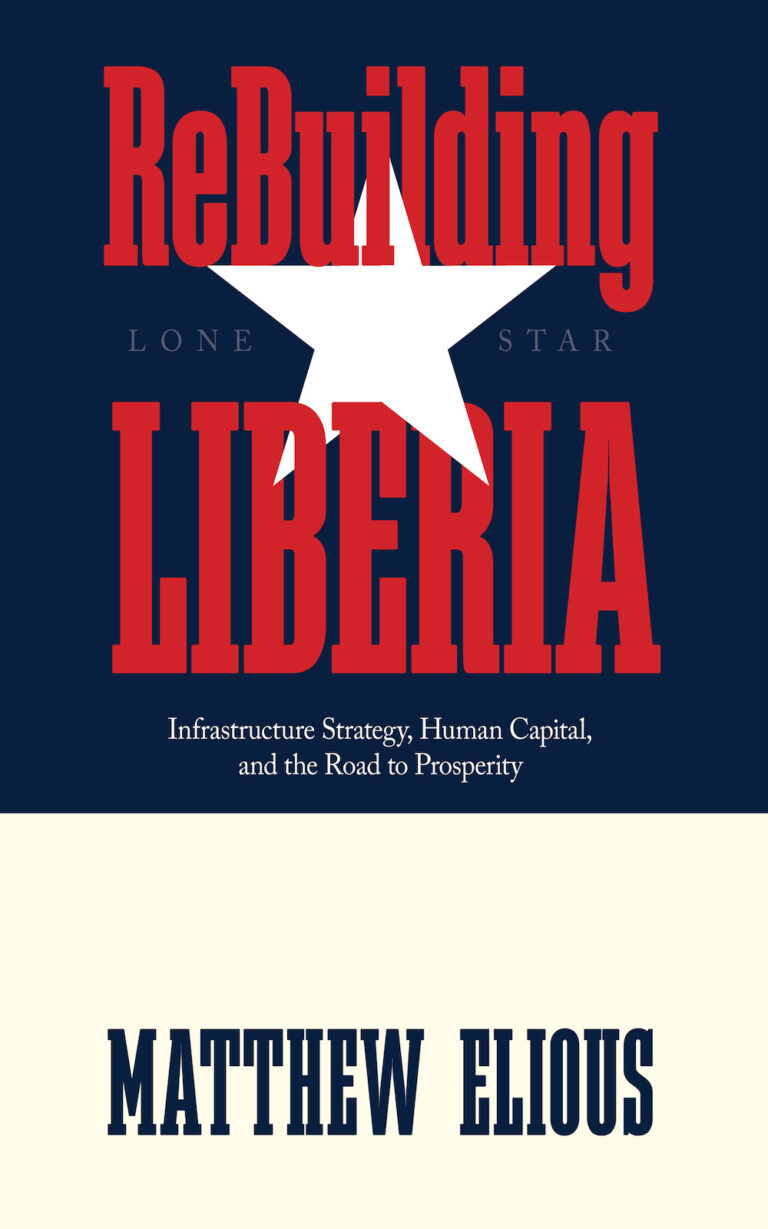
And what exactly is the work? My book, ReBuilding Liberia (www.RebuildingLiberia.com) , lays it out in full, and its companion portal, LrOneMap, proves it — because an argument of this size cannot merely be declared; it must be demonstrated with visual evidence and empirical data, measured from the vantage of thirty-five years in geodetic engineering. At the center of the plan is the National Development Service — the NDS — a doctrine that organizes Liberia’s own youth and able-bodied citizens into the disciplined, hands-on formation that built every developed nation on earth. Roads first — the arterials, the bloodline of economic activity, growth, and prosperity. Then everything the roads make possible: farms connected to markets, clinics connected to villages, schools connected to children, counties connected to each other, a people connected into one nation.
So today I invite you — Black America — to join us, and to join my daughters Mattie and Maya, in vindicating Paul Cuffe. Embrace his dream. Help us rewind and build an African nation — Liberia, no matter how small — into the shining example he died believing in: self-preservation, perseverance, resourcefulness. Read the book. Explore the portal. Invest your voice, your networks, your skills, and your capital in the NDS. Come and see the country your history began.
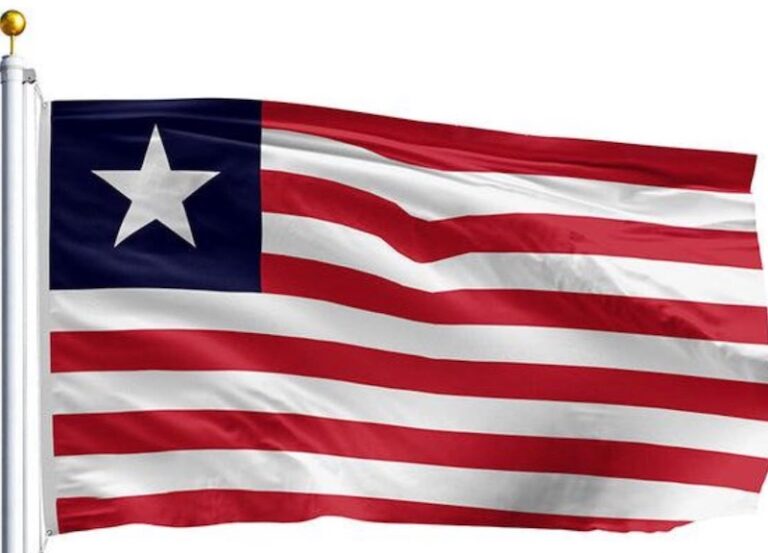
Liberia’s flag carries a single star. For nearly two hundred years it has been called the Lone Star. It does not have to remain lone. With your hands joined to ours, the Lone Star becomes the Shining Star — an example to Black Africa, and to Black Americans everywhere, of what our people build when the building is finally ours.
Paul Cuffe ran out of years. We have not. Let us finish what he started.