


IN A NUTSHELL
|
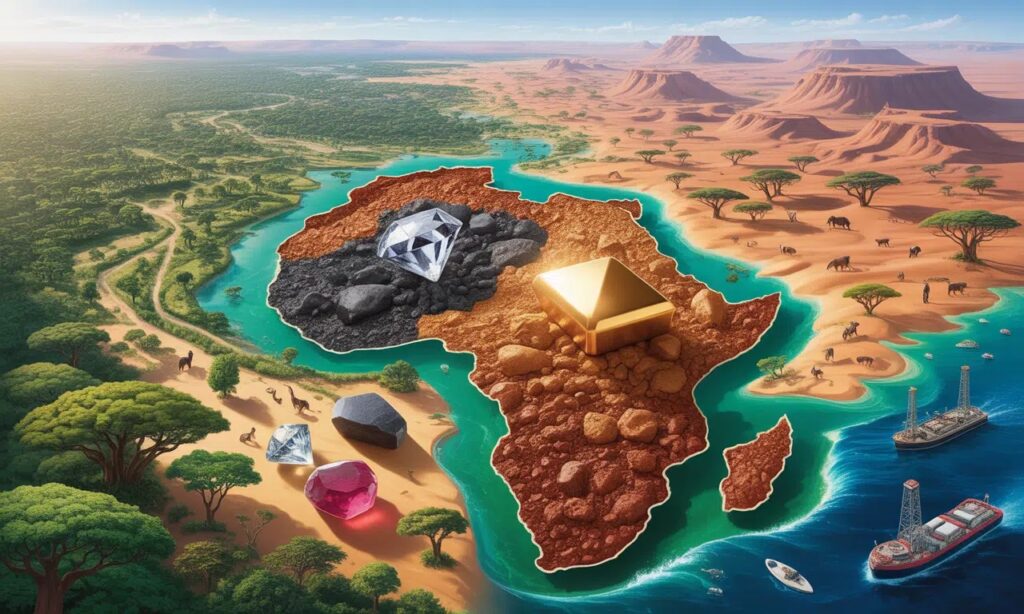
The African continent, covering roughly 11,724,000 square miles (about 30,365,000 sq km) and stretching some 5,000 miles north–south and 4,600 miles east–west, is a geopolitical and economic powerhouse defined by its natural resources. It contains roughly 30% of the world’s mineral reserves, about 12% of global oil and 8% of natural gas, and natural capital often represents 30–50% of national wealth across the continent. From diamonds, gold and platinum to oil, copper, cobalt and cocoa, Africa supplies raw materials that shape markets worldwide. Yet this abundance is contested: more than 70% of people in Sub‑Saharan Africa depend on forests, while illicit extraction and environmental degradation bleed an estimated USD 195 billion from the continent each year. Regionally, conservation and tourism in East Africa attract millions of visitors, West Africa accounts for a surge in hydrocarbon discoveries, and South Africa remains a minerals hub—evidence that Africa’s resources are central to global supply chains even as governance and sustainability lag behind.
Scale and concentration of natural capital
Africa is not merely large; it is immense in both geographic and resource terms. The continent spans roughly 11,724,000 square miles (about 30,365,000 square kilometres), stretching nearly 5,000 miles north to south and about 4,600 miles east to west. Such scale matters: spatial extent correlates with diversity of ecosystems, mineral belts, and maritime zones that underpin global supply chains and local livelihoods.
The United Nations places Africa at the centre of global resource endowments: roughly 30 percent of the world’s mineral reserves, 12 percent of oil reserves and 8 percent of natural gas reserves reside on the continent. Natural capital often represents between 30 and 50 percent of total wealth in many African nations, and more than 70 percent of people in Sub-Saharan Africa still depend on forests and woodlands for subsistence. Land in Africa is therefore simultaneously a socio-cultural asset and an economic foundation.
These facts strengthen a single argument: the continent’s geography and resource concentration give it leverage in global markets and development strategies. Yet capturing that potential requires governance choices and investment frameworks that treat these assets as durable capital rather than disposable rent. The World Bank has argued that Africa’s untapped resource potential could become a genuine engine for transformation if linked to industrialization, transparent revenue management and human capital development; see the World Bank discussion at blogs.worldbank.org.
Appreciating scale also clarifies why resource management debates are not abstract: they shape trade patterns, urbanization, and biodiversity outcomes across millions of square kilometres. Resources are not evenly distributed, which elevates the political stakes for regions sitting atop lucrative deposits and coastal basins. For more historical context on resource distribution across the continent, consult consolidated overviews such as africanhistory.info.
Minerals, hydrocarbons and their global influence
The argument here is straightforward: Africa’s commodities matter to the world because they feed critical industries and strategic stocks. Diamonds, gold, copper, cobalt, platinum, uranium and rare earths power electronics, renewable technologies and defense supply chains. Hydrocarbons—oil and natural gas—continue to underpin trade balances and energy security for importing nations. Control of these resources translates directly into geopolitical and economic leverage.
Five countries—Nigeria, Libya, Algeria, Egypt and Angola—dominate continental oil output and together account for roughly 85 percent of Africa’s oil production. Yet new discoveries, particularly offshore fields in West Africa, are reshaping the map. Senegal’s Yakaar-Teranga, Mauritania’s Orca and Ivory Coast’s Baleine together represent around 3.6 billion barrels of oil equivalent, underscoring the region’s emergence as the continent’s hydrocarbon vanguard.
Mineral demand from industrialised and emerging economies keeps exploration capital flowing into Africa despite episodic downturns. From the copper belt in the DRC and Zambia to cobalt and nickel deposits supporting batteries, the continent supplies inputs that are scarce elsewhere. Nevertheless, the simple presence of resources does not guarantee broad-based development: value capture depends on local processing, stable policy, and infrastructure investment. Recent research on exploration and commodity cycles signals both opportunity and fragility; peer-reviewed studies and sector analyses, such as the synthesis available on ScienceDirect, highlight technological and environmental constraints shaping extraction.
Revenue flows from hydrocarbons and minerals also determine traderelationships. West Africa’s hydrocarbon boom has drawn industry conferences and bidding rounds that link the region to global energy markets, while export patterns keep many African states dependent on a narrow set of commodities. The core contention is clear: Africa’s resources are globally significant, but turning extraction into resilient development requires deliberate policy choices.
Regional profiles: East, West and South Africa
Regional differences matter because they determine how resources interact with people and markets. East Africa combines remarkable biodiversity with nascent energy and mineral plays. Countries have protected large tracts as national parks and game reserves; tourism linked to wildlife generated millions of inbound trips recently, with about 7 million inbound trips to the region last year and parks such as Nairobi National Park and Tanzania’s Selous drawing global visitors. These ecosystems are also under pressure from habitat loss and poaching, which undermines local value capture and international tourism revenue.
West Africa hosts some of the continent’s fastest-growing economies, an expanding middle class, and a hydrocarbon surge that accounts for a large share of newly discovered reserves. The region supplies fuels and foodstuffs to the EU and global markets, and countries like Nigeria possess a broad palette of untapped minerals—barites, kaolin, marble, and precious metals—awaiting orderly development under new national policies and investment frameworks.
South Africa remains uniquely mineral-rich with world-leading positions in platinum and chromium, substantial iron ore, manganese and coal deposits, and diverse base metals including copper and nickel. Mining has long anchored the economy, even as manufacturing and services have grown. Coal remains a major export and feedstock for synfuels, while platinum-group metals sustain global automotive and industrial supply chains.
| Region | Key resources | Distinctive challenge |
|---|---|---|
| East Africa | Fluorspar, titanium, zirconium, gold, oil, gas, cobalt, diamonds | Wildlife conservation vs. land conversion |
| West Africa | Hydrocarbons, gold, bauxite, iron, cocoa | Resource governance and new offshore licensing |
| South Africa | Platinum, chromium, iron ore, coal, manganese | Transitioning mining rents into diversified growth |
These regional profiles show that resource endowments produce distinct development opportunities and vulnerabilities. Trade corridors, ports such as Mombasa and Dar es Salaam, and tourism corridors amplify economic value—if governance and conservation align to preserve the assets that underpin those revenues.
Illicit flows, environmental loss and social costs
Natural wealth is being eroded not only by extraction but by theft and mismanagement. The most forceful claim: a sizeable share of Africa’s resource-generated value never accrues to citizens because of illicit activities. Estimates suggest that illicit financial flows, illegal mining, logging, wildlife trafficking, unregulated fishing and environmental degradation drain roughly USD 195 billion per year in lost natural capital. That magnitude of loss is a direct tax on future growth and fiscal space.
Illicit activity feeds conflict dynamics and undermines state capacity. The literature linking minerals to conflict is well established; violent insurgencies and illicit trade have often flourished around gemstones and conflict-prone ores. For a focused analysis of how minerals catalyse and sustain conflict, see investigative reporting at AfricaTimes. Illegal logging and wildlife poaching simultaneously undercut biodiversity and tourism incomes, eroding the non-extractive revenue streams that many rural communities depend upon.
Marine resources are not immune: controversial projects and ethical concerns over animal welfare, such as the global response to intensive aquaculture practices, can trigger reputational and regulatory backlash; see the recent debate around the world’s first octopus farm at AfricaTimes. Resource depletion and cruelty concerns both weaken long-term economic sustainability and market access.
Policy failures that allow unregulated extraction or opaque revenue flows effectively convert non-renewable wealth into immediate consumption rather than enduring public goods. Addressing these losses requires interoperable measures—customs enforcement, chain-of-custody certification, anti-money-laundering frameworks and community stewardship—to stop leakage and recapture resource rents for development.
Governance, geopolitics and pathways to sustainable transformation
Control over resources has long shaped external involvement in Africa. Historical patterns of foreign ownership and unequal trade relations persist, fueling criticism that resource wealth is still channelled outward rather than used for domestic transformation. Scholars such as Walter Rodney argued that external control of land and mines is a mechanism of continuing economic dominance. Today, new modalities—commercial partnerships, state-level deals, and security-linked resource arrangements—reshape influence. For analysis on how resource deals are altering power dynamics, see Afripoli.
Yet the policy debate must move beyond blame to evidence-based options. Practical pathways include: (1) building downstream processing to capture greater value locally, (2) strengthening fiscal transparency via open contracts and sovereign wealth funds, (3) investing in infrastructure and skills so resource revenues translate into jobs, and (4) aligning extraction with climate-resilient practices and biodiversity preservation. The World Bank has highlighted the transformational potential of such integrated approaches; see blogs.worldbank.org.
External partners also matter: trade relationships with the EU, China, the US and others shape demand and standards. Targeted diplomacy can translate into technology transfer, investment in clean energy and stronger regulatory regimes. Industry trends and investor expectations are shifting toward sustainability, traceability and social licence to operate, a dynamic documented in sectoral analyses including commentary at African Leadership Magazine.
If African states can combine transparent governance, community rights and strategic industrial policy, natural resources will be assets for transformation rather than sources of rent-seeking and conflict. Practical reforms—improved contract negotiations, enhanced surveillance against illicit flows, regional coordination on maritime resources and investment in renewable alternatives—will determine whether resource wealth translates into sustained prosperity.
Strategic Assessment
Africa’s vast expanse and diversity make it a pivotal actor in the global distribution of natural resources. Spanning roughly one-fifth of the world’s land area and stretching thousands of miles in every direction, the continent holds disproportionate shares of minerals, hydrocarbons, and biodiversity that materially shape international markets and geopolitical calculations. The presence of oil, natural gas, precious metals and industrial ores positions Africa not as a peripheral supplier but as a strategic partner whose resource management decisions reverberate worldwide.
Yet the continent’s resource wealth coexists with structural challenges: weak governance, illegal exploitation, and environmental degradation undermine the ability of resource rents to translate into sustained economic development. Illicit activities—illegal mining, logging, and wildlife trafficking—erode natural capital and drain billions annually, reducing the long-term value of these endowments. This reality argues convincingly that mere possession of resources is insufficient; effective institutions and transparent value chains are essential to convert extraction into inclusive prosperity.
Regional variation demands tailored approaches. East Africa’s combination of protected ecosystems, tourism potential, and emerging mineral finds necessitates conservation-sensitive investment. West Africa’s hydrocarbon discoveries and growing consumer markets call for value-addition and local content policies. Southern Africa’s deep mineral base requires diversification to prevent overreliance on commodity cycles. Across all zones, prioritising sustainable, climate-resilient practices will multiply benefits for present and future generations.
Therefore, global actors and domestic policymakers must shift from extractive short-termism to partnership models that strengthen governance, enforce anti-illicit measures, and invest royalties into human capital and infrastructure. Only by aligning market access, environmental stewardship, and accountable institutions can Africa’s resource endowment be transformed into durable wealth and equitable development that serves both local populations and global stability.
Africa’s natural resources and their global significance — Frequently Asked Questions
Q: What gives Africa global strategic importance in terms of natural resources?
A: The continent combines vast landmass and rich endowments: it covers roughly one-fifth of the world’s land and contains a disproportionate share of critical commodities. This combination means Africa supplies materials — from minerals to hydrocarbons — that are essential to global industry and energy markets, so how those assets are managed has consequences far beyond the continent.
Q: How large is Africa geographically and why does that matter for resources?
A: Africa spans about 11.7 million square miles (≈30.4 million km²) and stretches roughly 5,000 miles north–south and 4,600 miles east–west. That scale creates diverse climates and ecosystems, which in turn host enormous concentrations of minerals, forests, freshwater systems and coastlines — the physical basis for natural-asset value and economic potential.
Q: What share of the world’s mineral and hydrocarbon reserves is located in Africa?
A: According to international estimates, Africa holds roughly 30% of remaining global mineral reserves, about 12% of oil and around 8% of natural gas reserves. Those percentages underline why global energy and mining players remain intensely focused on the continent.
Q: How important is natural capital to African countries’ wealth?
A: For many African states, natural capital represents a very large portion of national wealth — typically between 30% and 50%. In Sub‑Saharan regions more than 70% of people depend on forests and woodlands for livelihoods, so land and ecosystems are both socio‑cultural assets and primary economic drivers.
Q: What kinds of resources are found across Africa?
A: The continent’s portfolio includes crude oil, natural gas, coal, a broad array of metallic minerals (gold, copper, cobalt, iron ore, platinum, chromium), industrial minerals (bauxite, limestone), and gemstones (diamonds, emeralds), plus high‑value agricultural exports such as cocoa. This diversity explains Africa’s centrality to multiple global supply chains.
Q: How do resources differ between regions like East, West and South Africa?
A: Regions exhibit distinct comparative advantages: East Africa combines biodiversity, tourism and deposits of minerals such as copper and cobalt; West Africa is a focal point for recent hydrocarbon discoveries and oil/gas development; South Africa remains exceptionally rich in a wide range of ores — notably platinum, chromium and iron — plus large coal reserves used for power and exports.
Q: What is notable about natural resources and conservation in East Africa?
A: East African countries have designated extensive areas as national parks and reserves, driving tourism (millions of inbound trips annually) and preserving unique species like the black rhinoceros. Yet the region also faces habitat loss and poaching, which threaten the long‑term value of both biodiversity and tourism revenue.
Q: Why is West Africa considered central to the continent’s hydrocarbon future?
A: West Africa has accounted for the bulk of recent offshore discoveries — nearly 60% of newly found reserves by volume — with major finds totaling several billion barrels of oil equivalent. That resource momentum, coupled with expanding local markets, makes the region pivotal for energy investments and trade links with Europe and beyond.
Q: What distinguishes South Africa’s resource economy?
A: South Africa stands out for the depth and variety of its mineral base — it is the world’s largest producer of platinum and a major source of chromium, manganese and iron‑bearing ores. While manufacturing plays a large role in employment, mining remains central to export earnings and attracts substantial domestic and international capital.
Q: What major threats undermine the sustainable use of Africa’s resources?
A: Unsustainable extraction and widespread illicit activities — including illegal mining, illegal logging, illicit wildlife trade, unregulated fishing and illicit financial flows — drain value from the continent. Analysts estimate annual losses on the order of USD 195 billion, a scale that erodes public revenue, fuels corruption and damages ecosystems.
Q: How has foreign involvement affected Africa’s resource sectors?
A: Historical and ongoing external control of resource assets has often meant that a large share of extracted value accrues to foreign firms and markets rather than local communities. This dynamic — described by some as the “scourge of raw materials” — can perpetuate underdevelopment when governance, local beneficiation and transparent revenue management are weak.
Q: Can Africa convert its resource wealth into sustainable development?
A: Yes, but only if resource policies shift from short‑term extraction toward results‑oriented, climate‑resilient and transparent management. That requires stronger governance, reinvestment of resource rents into human capital and infrastructure, regional cooperation to pool benefits, and decisive action against illegal exploitation that currently siphons off value.
Source: AfricaTimes