
-An Achievement that Caps Diplomatic Renaissance Under Foreign Minister Beysolow Nyanti
Sixty-four years after it last sat at the world’s most powerful peace and security table, Liberia on Friday formally reclaimed its place on the United Nations Security Council (UNSC), marking a watershed moment in the country’s diplomatic history and underscoring what many observers describe as the single most significant foreign policy achievement of the Boakai administration so far.
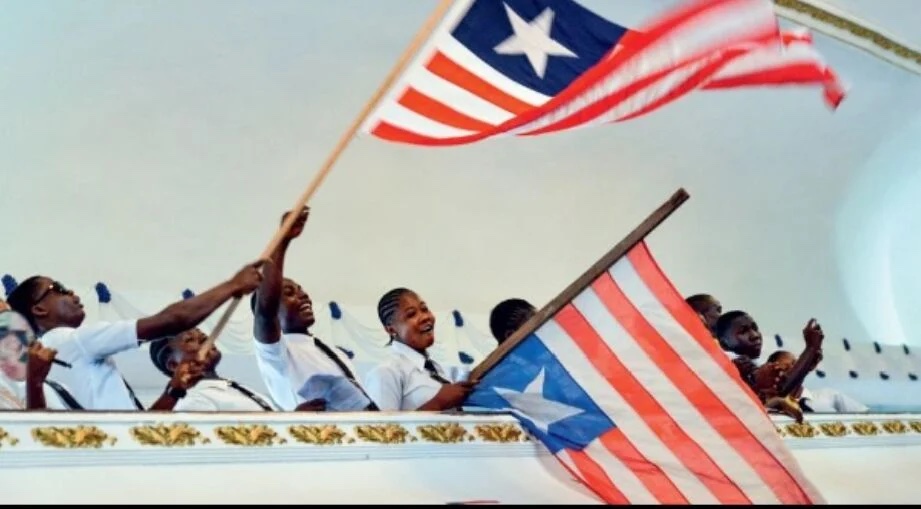
The historic return was sealed at a solemn flag installation ceremony at the UN Headquarters in New York, where the Security Council formally welcomed its five new non-permanent members for the 2026–2027 term: Bahrain, Colombia, the Democratic Republic of the Congo, Latvia, and Liberia. As their national flags were hoisted in the Council’s garden quadrangle, Liberia’s Lone Star banner joined those of the world’s leading security decision-makers, symbolizing the beginning of a two-year mandate on the 15-member body charged with maintaining international peace and security.
Liberia was represented at the ceremony by its Permanent Representative to the United Nations, Ambassador Lewis G. Brown, who described the moment as both an honor and a solemn responsibility.
“Liberia’s return to the Security Council is not only a point of national pride but a solemn responsibility we undertake with humility and resolve,” Ambassador Brown said.
“We stand ready to contribute meaningfully to peacekeeping, conflict prevention, and the promotion of human rights around the world.”
A Historic Return, Decades in the Making
Liberia last served on the Security Council in 1961, long before the civil conflicts that would later devastate the country and draw one of the UN’s longest peacekeeping missions. That history made Friday’s ceremony deeply symbolic: a nation once defined internationally by war and fragility now returning as a contributor to global peace.
In a detailed statement delivered at the ceremony, Ambassador Brown traced that journey, noting that Liberia’s flag now flies at the UN “not as a symbol of recovery, but as a symbol of responsibility.”
“Eight years ago, the United Nations flag was lowered in Liberia to signal the end of the peacekeeping mission and the return of full responsibility for peace and security to the government and people of Liberia,” he said.
“That moment challenged us to prove that peace could endure beyond the presence of peacekeepers. Through commitment to democracy, institutional reforms, and national reconciliation, Liberia has met the challenge.”
More than two decades after the Comprehensive Peace Agreement, he added, Liberia now stands “peaceful, democratic, and stable,” a transformation that helped earn the confidence of 181 UN member states that voted in favor of Liberia’s candidacy.
The Beysolow Nyanti Factor
While the moment belongs to the Liberian state, diplomats and analysts alike are unanimous in crediting Foreign Minister Sara Beysolow Nyanti as the principal architect of the successful Security Council bid.
Since her appointment, Minister Nyanti has pursued what her aides describe as a strategy of “proactive diplomacy”—a deliberate shift away from reactive engagement toward sustained coalition-building and visibility across multilateral platforms. Throughout 2025, she personally led high-level outreach to regional blocs and global partners, securing decisive endorsements from the African Union and ECOWAS, and positioning Liberia as a consensus candidate within the Africa and Asia-Pacific groupings at the UN.
Her approach emphasized Liberia’s post-conflict experience as an asset rather than a liability, presenting the country as a credible voice on peacebuilding, reconciliation, and inclusive governance.
On social media, Nyanti captured the national mood as the flag was raised.
“Proudly Liberian. Raise the flag! UNSC Day 1 has started with the installation of our flag,” she wrote, thanking Ambassador Brown for his representation.
She later added: “This is more than a flag. It’s a symbol of our voice on the world stage—a voice for peace, for justice, and for the multilateralism that keeps our planet together.”
Liberia’s ascendency to the Security Council is widely regarded as the tallest achievement of Minister Nyanti’s tenure, but it also crowns a broader record of diplomatic re-engagement since she took office.
Under her leadership, Liberia has regained relevance in key multilateral forums, strengthened ties with regional partners, and repositioned itself as a principled advocate of dialogue and cooperation. Senior diplomats note that her insistence on coherence between domestic reform efforts and foreign policy messaging helped restore confidence in Liberia’s international commitments.
The Security Council seat, however, stands apart. It places Liberia at the center of deliberations on some of the world’s most complex conflicts at a time of escalating global insecurity and renewed calls for reform of international institutions.
As Ambassador Brown noted, Liberia’s return is “a reflection of President Joseph Nyuma Boakai’s enduring belief that peace is both a privilege and a duty.”
“Liberia is here because multilateralism worked, because the African Union and ECOWAS stood firm, and because partners across the world believed that even nations emerging from conflict can contribute to global peace,” he said.
For Liberia, the symbolism is profound. Once a host to peacekeepers, the country now helps shape the mandates that deploy them. Once defined by conflict, it now speaks with authority born of experience.
“Our own experience affirms that sustainable peace is built through dialogue, inclusion, and respect for human dignity,” Ambassador Brown told the Council.
“We come committed to diplomacy because we have lived the cost of its absence.”
That lived experience is precisely what many believe Liberia brings to the Security Council at this critical juncture—insight grounded in history, and credibility forged through recovery.
As Liberia begins its two-year term, officials stress that while the seat is part of Africa’s collective representation, the country’s outlook will be global.
“The nameplate will read Liberia. The seat is Africa’s. But Liberia’s outlook, we promise you, will be global,” Ambassador Brown concluded.
For Foreign Minister Sara Beysolow Nyanti, the raising of the flag marks both a culmination and a commencement: the payoff of intensive diplomacy, and the start of an even more demanding phase of global engagement. In the calculus of modern Liberian diplomacy, few achievements rival the return to the Security Council—an unmistakable signal that Liberia is no longer merely rebuilding peace at home, but helping to safeguard it around the world.
Source: Liberian Observer