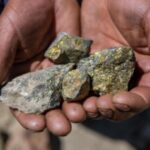
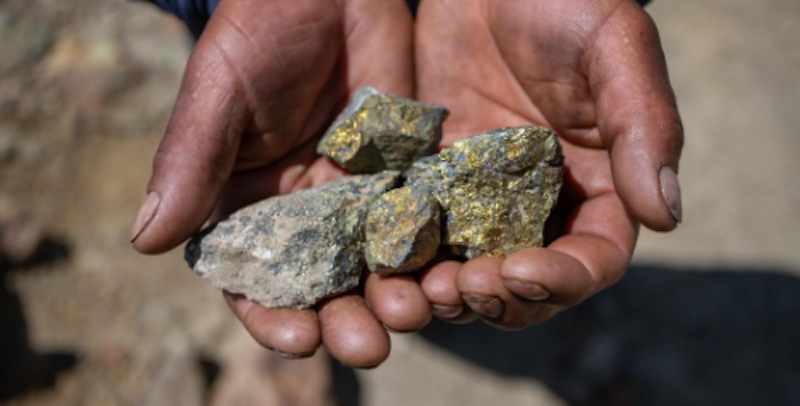
Liberia stands at a defining crossroads. Recent discoveries confirm that beneath our soil lie some of the most sought-after rare minerals on earth. These are the minerals that China, Russia, and the United States are competing to secure because they are essential to the technologies shaping the next century: electric vehicles, cell phones, MRI machines, robotics, and artificial intelligence.
Yet even as this discovery should inspire hope, it also raises a troubling question: will Liberia finally benefit from its resources, or will others continue to grow rich from what belongs to us?
For decades, foreign interests have taken Liberia’s minerals for far less than their true value. In remote areas, companies clear forests, scar the land with massive pits, and extract wealth that never truly reaches the Liberian people. Some even operate private airstrips in the interior, flying resources out of the country while the communities where the minerals are found remain poor. Liberia, a nation rich in natural resources, still ranks among the poorest countries in the world.
This should not be our destiny.
What God placed in the ground of Liberia belongs to the people of Liberia. The discovery of rare minerals gives us a historic opportunity to rethink how our mining industry works and to transform it into a true engine of national prosperity.
The need for change is urgent. Liberia currently has more than 1,000 legal mines and over 5,000 illegal ones. More than 600,000 diggers work the land, with a LARGE number of them CHILDREN. This situation is not only dangerous and unjust; it also means the country is losing enormous amounts of potential revenue.
Real and radical transformation of mining is not impossible. In fact, other African nations are already showing what can happen when a country takes greater control of its own resources.
Burkina Faso offers a powerful example. After expelling France and asserting greater control over its natural wealth, the country dramatically increased its revenue from gold. In the 2024–2025 fiscal year alone, Burkina Faso reportedly earned about $18 billion from its gold reserves after nationalizing them, this is far more than the roughly $1 billion it previously received from France.
Today, several African nations are moving in this direction. Mali, Niger, Zambia, Zimbabwe, Ghana, Botswana, South Africa, Guinea, and the Democratic Republic of Congo are all taking steps to gain greater control over their mineral resources and reduce dependence on foreign middlemen.
The question for Liberia is simple: when will we do the same?
Liberia also needs to examine international agreements that may affect our sovereignty over critical resources. One such agreement is the America First Global Health Strategy, which Liberia and several other countries have signed. In addition to provisions involving EXTREME SURVEILLANCE and the release of COUNTRY’S MEDICAL DATA, the agreement reportedly includes clauses connected to MINERALS EXTRACTION.
Other nations have already raised concerns. Zimbabwe rejected the agreement outright. Zambia refused to sign it. Kenya paused its participation after citizens questioned provisions involving the transfer of private medical data to an American company.
Liberians have the right to ask similar questions. Why is medical data tied to international agreements? Why are minerals mentioned in the same framework? And most importantly, do these arrangements serve Liberia’s interests?
With urgency and respect, our government should revisit and review any agreement that could affect the nation’s control over its natural wealth. Deals that shape Liberia’s future must serve the Liberian people first.
The framework for change already exists. What is needed now is the courage and the political will to act. Liberia has the resources to transform its economy, strengthen its institutions, and lift millions of people out of poverty. But that will only happen if we decide that our resources will finally work for us.
History will not be kind if we allow this moment to pass us by. The opportunity before us is enormous. The wealth beneath our soil could generate billions for Liberia if managed wisely and transparently.
The time for change is not tomorrow. The time is now.
History will judge whether we had the courage to seize it.
“Africa is Rising.”
Ruvelle Sherman Jones
Monrovia, Liberia