





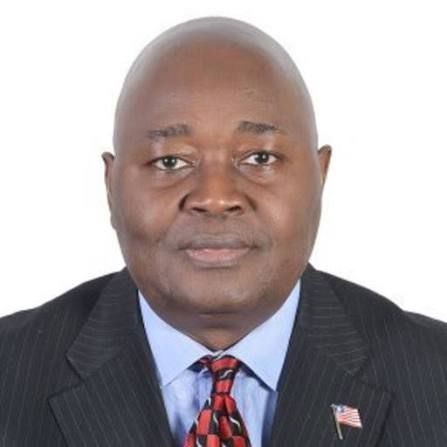
When His Excellency Joseph Nyuma Boakai, Sr., President of the Republic of Liberia, delivered his third State of the Nation Address to the 55th Legislature on January 26, 2026, he did more than review progress or outline routine priorities. He issued a forward-looking call to action—one that speaks directly to Liberia’s long-term development trajectory: the revision of the Charter of the University of Liberia (UL) to enable meaningful reforms and institutional restructuring.¹
By Al-Hassan Conteh, Ph.D.
This proposal deserves strong national endorsement. Reforming the UL Charter is not a symbolic exercise; it is a strategic imperative if Liberia’s premier public university is to fulfill its historic mission of training men and women for public and private service in a rapidly changing global economy.²
Why the Current Charter Limits Transformation
The University of Liberia’s Charter—rooted in statutes dating back to the mid-twentieth century and amended incrementally over time—reflects an era when universities were primarily state-controlled institutions with limited financial autonomy, narrow curricular flexibility, and centralized governance structures.³ While the Charter affirms UL’s national importance, it constrains the institution in several critical ways:
- Limited financial autonomy, restricting the university’s ability to diversify revenue sources, attract endowments, or engage industry partners at scale.⁴
- Rigid governance structures that slow decision-making and limit strategic responsiveness.⁵
- Outdated academic frameworks are insufficiently aligned with labor-market needs, technological change, and interdisciplinary research.⁶
President Boakai’s call to revise the Charter recognizes that structural reform—not piecemeal adjustment—is required to reposition UL as a modern, competitive, and workforce-oriented institution.⁷
Learning from African Universities That Reformed Successfully
Across Africa, leading public universities have undergone governance and charter reforms to remain relevant in the 21st century:
- University of Cape Town leveraged institutional autonomy to strengthen research output, global partnerships, and innovation ecosystems.⁸
- University of Ghana reformed its governance and academic structures to expand professional programs, digital learning, and externally funded research.⁹
- Makerere University undertook restructuring that enabled curriculum modernization, industry collaboration, and improved financial sustainability.¹⁰
These reforms demonstrate a common lesson: universities thrive when governance frameworks empower leadership, protect academic freedom, and link teaching and research to national development priorities.¹¹
Alignment with Liberia’s ARREST Agenda
Revising the UL Charter aligns squarely with the Human Capital Investment pillar of Liberia’s ARREST Agenda for Inclusive Development. Human capital is not built by aspiration alone; it requires institutions capable of delivering relevant skills, applied research, and innovation.¹²
A reformed Charter would enable UL to:
- Introduce labor-market-responsive curricula in science, technology, health, agriculture, engineering, climate studies, and public policy.¹³
- Establish flexible financial models to support scholarships, research grants, and infrastructure upgrades.¹⁴
- Strengthen faculty recruitment, retention, and research productivity, particularly in fields critical to national resilience.¹⁵
These priorities echo long-standing recommendations by the World Bank, whose research on African higher education emphasizes autonomy, accountability, and relevance as drivers of quality and impact.¹⁶
From Reform to Tangible Outcomes
Charter reform must ultimately deliver visible, measurable results for students and society. Among the most compelling outcomes would be:
- Workforce-oriented academic programs that improve graduate employability and entrepreneurship.¹⁷
- A learner-friendly, revitalized campus that supports digital learning, research, and student well-being.¹⁸
- Inclusive education frameworks, ensuring accessibility for persons with disabilities.¹⁹
- Enhanced faculty research capacity, especially in public health, agriculture, climate resilience, and technology.²⁰
- Stronger institutional capacity in infectious and parasitic disease research, contributing to epidemic and pandemic prevention—an urgent national and global priority.²¹
Together, these reforms would reposition UL as a catalyst for national transformation rather than a passive recipient of public funding.²²
Looking Ahead to 2050
With decisive legislative action and sustained political will, a reformed University of Liberia can realistically aspire to rank among the top twenty universities in Africa by 2050. This is not an abstract ambition; it is a development strategy. Nations rise when their universities rise—when they produce skilled graduates, informed citizens, and solutions to real-world problems.²³
President Boakai’s call to revise the UL Charter is therefore timely, necessary, and visionary. The Legislature should seize this moment, not merely to amend a document, but to unlock the full potential of Liberia’s flagship institution of higher learning—for today’s challenges and tomorrow’s opportunities.²⁴
Footnotes
- Government of Liberia, Annual Message of the President to the 55th Legislature, Monrovia, January 26, 2026.
- University of Liberia, Charter of the University of Liberia, as amended, Monrovia.
- Ibid.
- World Bank, Higher Education for Development: An Evaluation of the World Bank Group’s Support, Washington, DC, 2017.
- World Bank, The Road to Academic Excellence: The Making of World-Class Research Universities, Washington, DC, 2011.
- African Development Bank, Skills, Human Capital and Innovation in Africa, Abidjan, 2020.
- Government of Liberia, Annual Message, 2026.
- Cloete, N., et al., Universities and Economic Development in Africa, African Minds, 2011.
- University of Ghana, Strategic Plan 2014–2024, Accra.
- Makerere University, Institutional Transformation and Strategic Plan, Kampala.
- Altbach, P., Salmi, J., The Road to Academic Excellence, World Bank, 2011.
- Government of Liberia, ARREST Agenda for Inclusive Development, Monrovia.
- World Bank, Education and Skills for Inclusive Growth in Africa, Washington, DC.
- Ibid.
- UNESCO, Reimagining Higher Education in Africa, Paris.
- World Bank, Accelerating Catch-Up: Tertiary Education for Growth in Sub-Saharan Africa, 2009.
- African Union, Continental Education Strategy for Africa (CESA 16-25).
- World Bank, Digital Transformation of Education in Africa, 2020.
- UNESCO, Inclusive Higher Education Policies, Paris.
- World Health Organization, Strengthening Research Capacity in Developing Countries.
- World Bank, Pandemic Preparedness and Higher Education, Washington, DC.
- Cloete et al., Universities and Economic Development in Africa.
- Salmi, J., The Challenge of Establishing World-Class Universities, World Bank.
- Government of Liberia, Annual Message, 2026.
Dr. Al-Hassan Conteh, PhD, is the 12th President of the University of Liberia and currently serves as Liberia’s Ambassador to the United States.