The visa pauses, announced by the U.S. State Department and set to take effect on January 21, 2026, affects immigrant visa applicants from 75 countries, including Liberia.
-Liberia Caught in Policy Crosscurrents?
A sweeping U.S. pause on immigrant visa processing has placed Liberia and its fellow African members of the United Nations Security Council’s A3 group—Somalia and the Democratic Republic of the Congo—under renewed diplomatic scrutiny, following their unusually strong condemnation of Washington’s actions in Venezuela. While U.S. officials frame the policy as a technical immigration measure tied to “public charge” assessments, the timing has fueled speculation that the A3’s principled stand at the Security Council may have pushed the three countries into Washington’s political crosshairs.
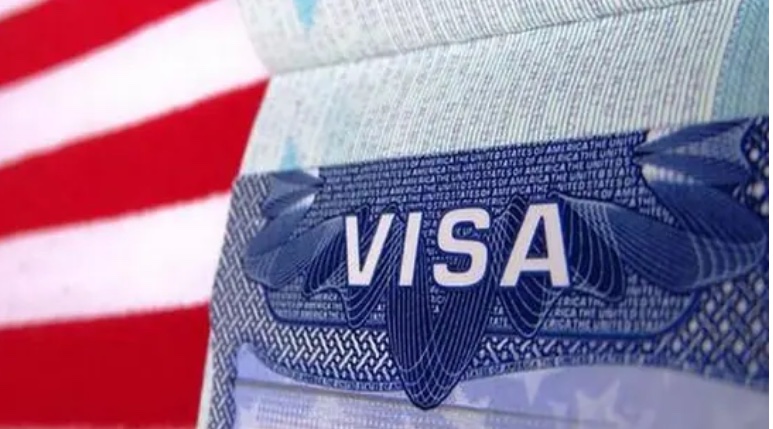
The visa pauses, announced by the U.S. State Department and set to take effect on January 21, 2026, affects immigrant visa applicants from 75 countries, including Liberia. It temporarily halts the issuance of visas that lead to permanent residency—family-based, employment-based, and Diversity Visa categories—while the United States reassesses vetting procedures. Non-immigrant visas, such as tourist, business, student, and exchange visas, remain unaffected.
Still, for the A3—newly assertive on the global stage—the policy has taken on geopolitical overtones.\
A3’s Venezuela Stand and Washington’s Ire
Barely days after reclaiming its seat on the Security Council for the first time in more than six decades, Liberia led the A3 in a forceful statement condemning what it described as violations of international law and acts of aggression against Venezuela. Speaking during an emergency Council session on January 5, Liberia’s Permanent Representative, Ambassador Lewis G. Brown, warned that the reported detention of Venezuelan President Nicolás Maduro and attacks on state institutions posed “serious challenges” to regional peace and security.
“Our position underscores the importance of dialogue, the peaceful settlement of disputes, and respect for constitutional and institutional frameworks,” Brown told the Council, reaffirming the A3’s commitment to sovereignty and territorial integrity under the UN Charter.
Though the statement stopped short of explicitly naming the United States in every instance, diplomats widely interpreted it as a clear rebuke of Washington—an unusually bold move for Liberia, a country with deep historical and diplomatic ties to the U.S., and for Somalia and the DRC, both of which rely heavily on Western security and development support.
“This is a clear indication that Liberia intends to be an active, values-driven member of the Council,” said one African diplomat familiar with the proceedings. “It shows a willingness to defend international law even when it is uncomfortable.”
Within weeks, citizens of all three A3 countries found themselves among those affected by Washington’s immigrant visa pause.
The Visa Freeze: Policy or Politics?
Officially, the U.S. government insists the measure is not punitive. In a statement, the State Department said the pause aims to “bring an end to the abuse of America’s immigration system” and to prevent the entry of foreign nationals likely to rely on public assistance.
“Immigrant visa processing from these 75 countries will be paused while the State Department reassesses immigration processing procedures,” the statement said, emphasizing that the action falls under the long-standing “public charge” rule.
Yet the breadth of the list—which includes geopolitical rivals such as Iran and Russia alongside fragile states like Somalia and Haiti—has not quieted suspicions. For the A3, the optics are particularly sensitive: three African countries that jointly criticized U.S. conduct on the world’s most powerful diplomatic front now face a policy that directly affects their citizens’ pathways to permanent residence in the United States.
Many are cautioning against drawing a straight line between the Venezuela statement and the visa pause but acknowledge that diplomacy often operates through signals rather than explicit actions or sanctions.
“In international relations, timing matters,” a former top diplomat told the Daily Observer on Wednesday in an interview. “Even if the policy is global, its impact on newly vocal actors like the A3 sends a message about the costs of defying major powers.”
For citizens of the 75 affected countries, the immediate impact is procedural but significant. Interviews for immigrant visas will continue, but final issuance is paused pending new U.S. guidelines. Applicants seeking to reunite with family, take up approved employment, or immigrate through the Diversity Visa program face uncertainty, delays, and potential financial strain.
Expanded vetting criteria now emphasize age, health, family circumstances, financial resources, education, professional skills, employment prospects, English proficiency, and any past use of public assistance. While such considerations have long existed in U.S. law, experts warn that the pause effectively raises the bar at a time when immigration pathways are already narrowing.
According to sources, this directive could further restrict access to U.S. permanent residency, particularly for applicants from lower-income countries who may struggle to meet heightened financial thresholds.
For Liberia, the situation is especially complex. On one hand, the country has just secured a significant win in bilateral relations: the U.S. recently extended the validity of B-1, B-2, and B1/B2 non-immigrant visas for Liberian travelers from 12 months to 36 months, at no cost, restoring long-sought reciprocity.
The move, confirmed by the U.S. Department of State and following high-level talks between Foreign Minister Sara Beysolow Nyanti and Secretary of State Marco Rubio, was expected to strengthen business, tourism, and people-to-people ties.
On the other hand, Liberia’s inclusion in the immigrant visa pause underscores the fragility of gains made on one front when geopolitical tensions rise on another.
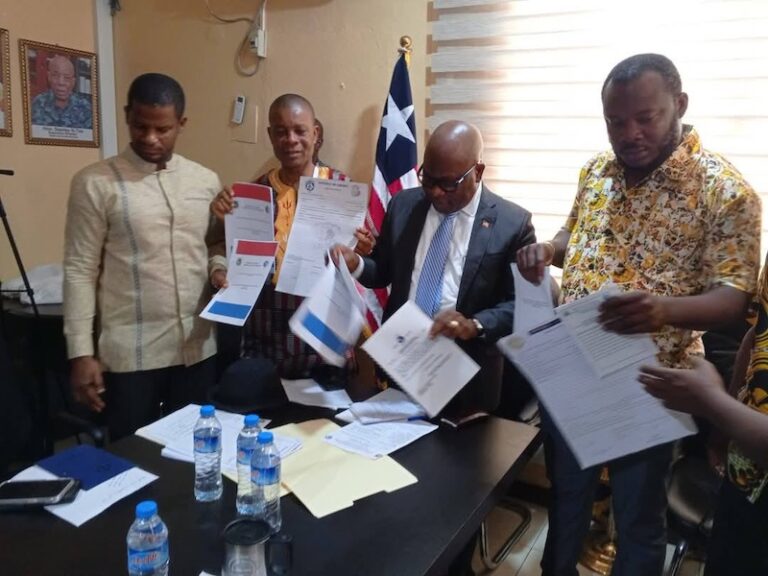
In a statement, Liberia’s Ministry of Foreign Affairs sought to reassure the public, stressing that the pause “does not constitute a ban on U.S. visas” and applies only to immigrant visas leading to permanent residency.
“Non-immigrant travel for tourism, study, and business remains open,” the Ministry said, adding that the government is engaging U.S. authorities through diplomatic channels to seek clarification and advocate for fair treatment of Liberian applicants.
Liberia’s first act on the Security Council has been widely praised as principled and courageous. Drawing on its own post-conflict history, the country argued that sustainable peace is built through dialogue and respect for sovereignty, not coercion.
“We believe a sustainable and peaceful resolution can only be found through constructive dialogue among Venezuelans themselves,” Ambassador Brown emphasized.
Yet the unfolding visa saga highlights the real-world costs that can accompany such positions, particularly for smaller states navigating a polarized global order.
Whether the visa pause will be short-lived or evolve into a more enduring restriction remains unclear. What is clear is that Liberia—and the A3 more broadly—now finds itself testing the balance between a values-driven foreign policy and the practical consequences of challenging powerful allies.
As Ambassador Brown said during Liberia’s induction to the Council, “The nameplate will read Liberia. The seat is Africa’s. But Liberia’s outlook… will be global.”
That global outlook, it seems, comes with both newfound influence and fresh vulnerabilities.
Source: Liberian Observer