



—Defends his administration’s economic record; urges diaspora to invest in Liberia’s development
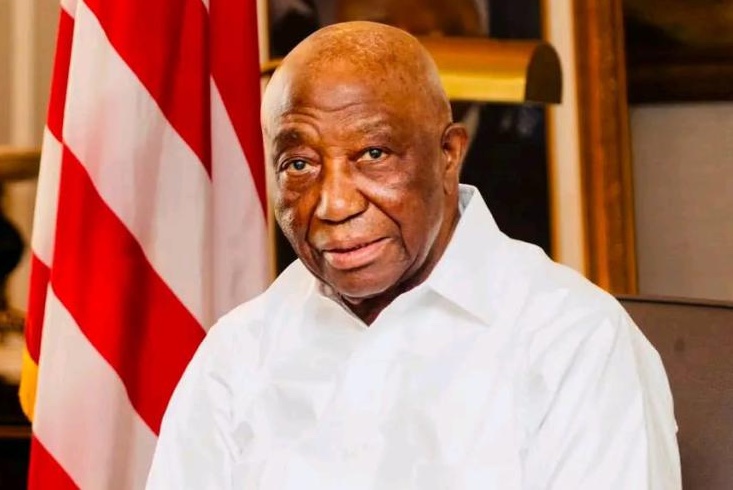
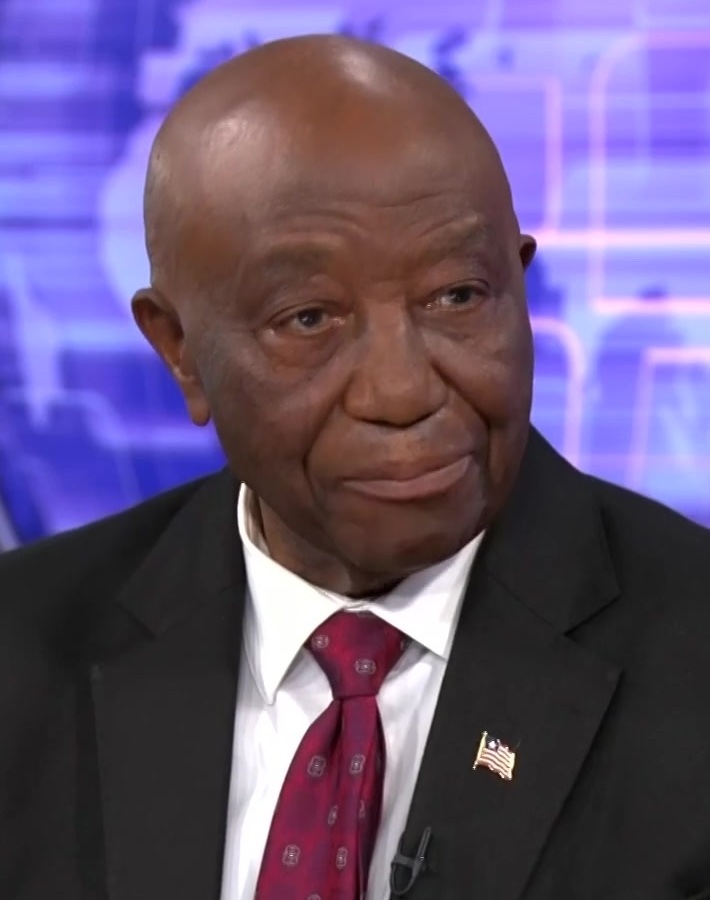
President Joseph Nyuma Boakai has mounted a vigorous defense of his administration’s economic record, pointing to rising domestic revenue, economic growth, infrastructure investments and reforms in agriculture and energy, while challenging Liberians in the United States to turn their capital, expertise and professional networks into investments that can accelerate development at home.
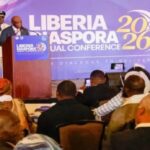
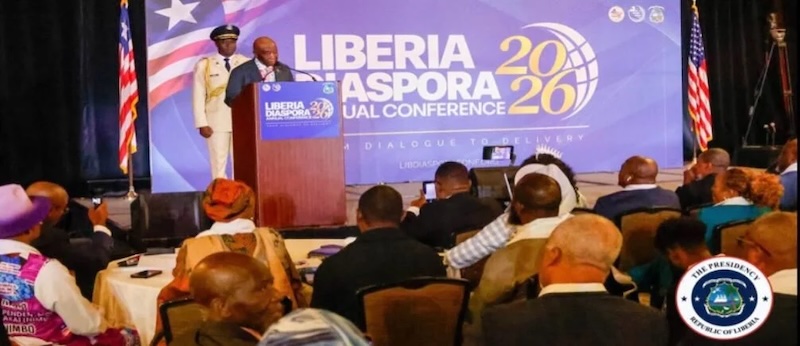
Addressing a town hall meeting with members of the Liberian diaspora on Sunday, September 27, 2026, Boakai said his administration’s central objective under the Arrest Agenda for Inclusive Development (AAID) is to move Liberia beyond poverty reduction toward wealth creation and broader economic opportunity.
“Something I don’t like to talk about, I don’t like to hear reducing poverty, because I have said, poor, poorer, poorest. If you are the poorest, you are poor. If you are poor, you are poor,” Boakai said.
“So I said, why not say creating wealth? I think it sounds more like it,” he added.
The President pointed to economic growth of 4 percent in 2024 and 5.1 percent in 2025, while inflation fell to about 4 percent by December 2025. He also said gross international reserves rose from approximately US$475 million in 2024 to US$576 million in 2025.
But Boakai placed particular emphasis on domestic revenue, announcing that government collections had surpassed US$1 billion in September 2026, compared with approximately US$612 million in 2023, US$699 million in 2024 and US$848 million in 2025.
“So today they call me the one billion man,” he said.
The President said the larger challenge is now ensuring that increased domestic revenue translates into better public services, infrastructure and economic opportunities for Liberians.
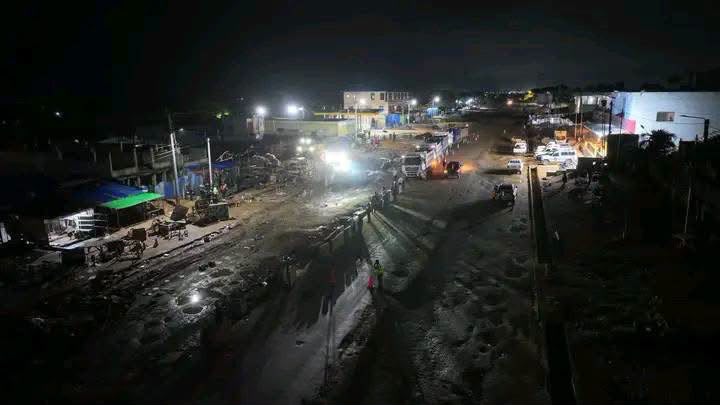
On infrastructure, Boakai pointed to the dedication in July 2026 of 81 kilometers of the Gbarnga-Salayea Road and the groundbreaking for the Salayea-Konia-Zorzor-Yella corridors, backed by US$73.8 million in financing.
“These investments are intended to connect communities, facilitate commerce, and improve access to essential services,” he said.
Energy was another major area highlighted by the President. He said Liberia continues to participate in the Côte d’Ivoire-Liberia-Sierra Leone-Guinea (CLSG) regional power interconnection, while the government’s priorities for a proposed second Millennium Challenge Corporation Compact include power generation, transmission, sector governance and workforce development.
“Our objective is more reliable, affordable power to support production in general,” Boakai said.
He also cited the Electronic Government Procurement System, launched in January 2025 to move public procurement from paper-based processes to a digital platform.
According to Boakai, 56 government procurement entities had been onboarded for Phase II implementation and training by May 2026.
The President said the system is intended to strengthen competition, improve transparency and provide better value for public funds.
Agriculture, which he described as the first pillar of the AAID, also featured prominently in his address.
Boakai said the National Agriculture Development Plan seeks to move Liberia from subsistence production toward larger-scale, sustainable and increasingly mechanized agriculture.
He pointed to government support for smallholder farmers, modern equipment, technical expertise, value chains and market access, saying the objective is to increase domestic production, reduce food imports and create rural livelihoods.
On education, Boakai cited the US$88.7 million Excel Project, launched in July 2025 to strengthen literacy and numeracy in public early childhood and primary schools.
He also highlighted the University of Liberia’s first doctoral program and the renovation of Gertrude Yancey Public School.
“We have said that education and health are the responsibility of the government,” Boakai said.
The President further defended his administration’s efforts on accountability, citing strengthened asset declaration requirements and audits conducted by the General Auditing Commission.
“The first officials that did not declare their assets for a period of time are using their money to buy school benches,” he said.
He also referenced the renewal in May 2026 of the mandate of the Office of the War and Economic Crimes Court.
“Liberia wants to make sure we get rid of impunity,” Boakai declared.
The President also highlighted Liberia’s election to the United Nations Security Council for the 2026–2027 term, with 181 votes, describing it as a significant milestone for the country’s international engagement.
Liberia is serving on the Council for the first time since 1961 and is scheduled to hold the Council’s presidency in December 2026.
But beyond government achievements, Boakai devoted significant attention to what he described as the important role of Liberians living abroad.
“The Diaspora is not outside Liberia’s development story. It is a part of it,” he said.
Boakai said the 2026 Diaspora Conference theme, “From Dialogue to Delivery,” reflects the government’s desire to move toward investment, innovation, skills development and measurable outcomes.
He said government is exploring mechanisms including a Diaspora Investment Fund, Diaspora Engagement Commission and Diaspora Savings Fund to strengthen the connection between Liberians abroad and national development.
“The productive call is for Diaspora expertise, enterprise networks, and capital to connect with AAID priorities and county-level needs,” he said.
Boakai also encouraged Liberians abroad to respond to efforts by Liberian embassies and consulates to improve information on the diaspora.
“The purpose is not simply to count people. It is to connect skills, experience, investment, professional networks, to concrete national programs,” he said.
He said better diaspora data could help connect Liberian doctors, engineers, educators, entrepreneurs, researchers and other professionals with opportunities to contribute to national development.
Despite outlining his administration’s progress, Boakai acknowledged that challenges remain in employment, infrastructure, healthcare, education, public service delivery and the cost of living.
“These are documentary steps along a longer national journey,” he said.
He stressed that implementation and measurable results would remain critical to the AAID.
“The AAID-provided framework, implementation, and measurable results must remain a test,” Boakai said.
The President called for continued cooperation among the government, the private sector, civil society, development partners and the diaspora.
“I want to welcome your questions, your practical ideas on how we can improve delivery,” he said.
“Let us keep the conversation forward and focus on what works,” Boakai added.
Source: Liberian Observer